March 2026
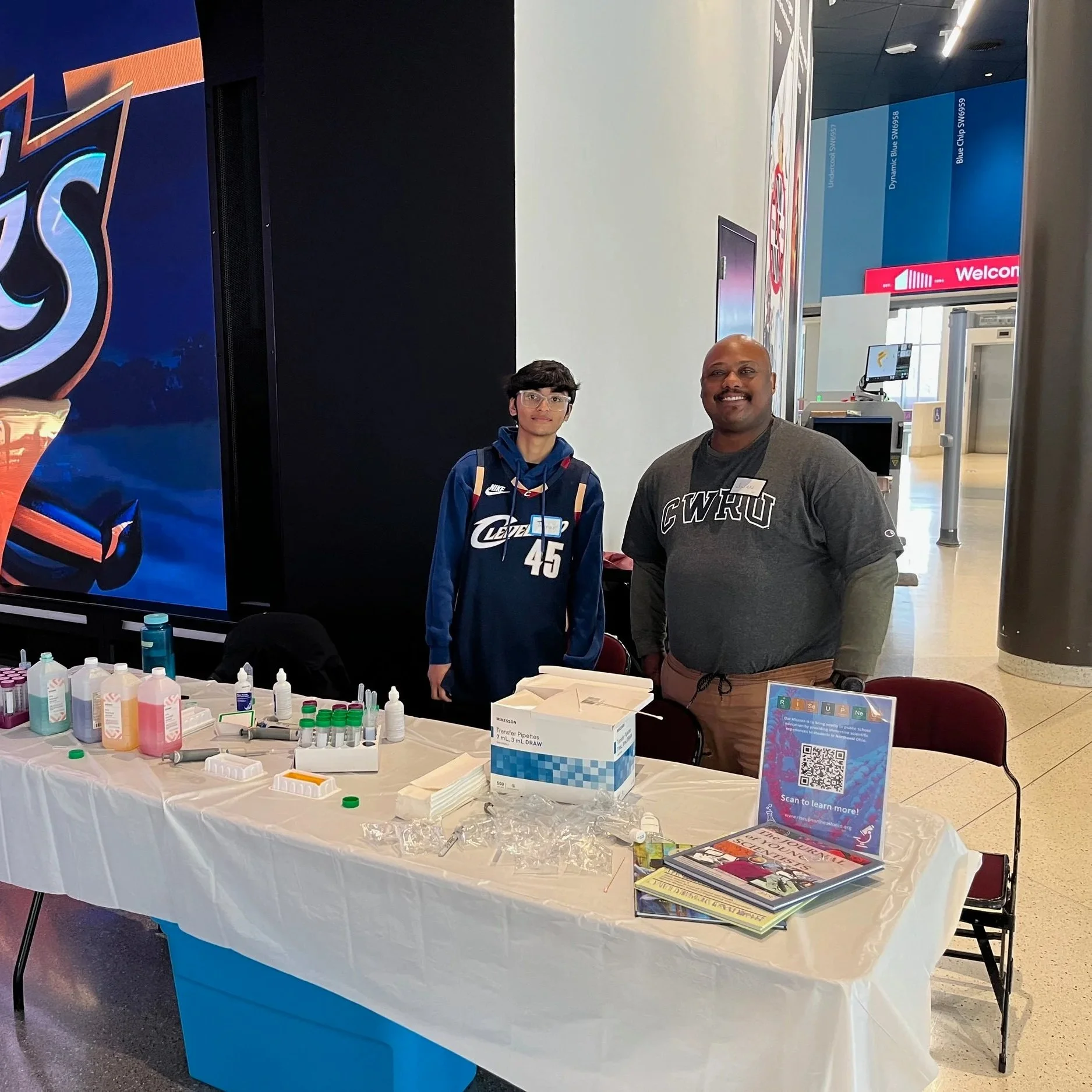
Tanmay and Juan
Score with STEM
Rise Up was proud to participate in the Score with STEM event at Rocket Arena on March 27th! Score with STEM is an amazing celebration of science, learning, and community put together by NEO:STEM. This is our second year in row that we have partnered for this action packed day. There were activities that explore everything from the geometry of a perfect basketball shot to the data behind game-day decisions. Students and families saw how STEM powers every play, making learning real, relevant, and exciting. At a time when Cleveland faces a growing demand for STEM talent, Score with STEM turns the Cavalier’s concourse into an opportunity for career gateways by building curiosity, confidence, and future-ready skills.
At our table, students had the chance to isolate their very own DNA, an unforgettable activity that turned something microscopic into something they could see and take home. Watching students light up as they discovered their DNA was a powerful reminder of how meaningful interactive science experiences can be. We love these pop-up events because they allow us to reach students of all ages in a casual, fun environment.
We’re incredibly grateful to our dedicated volunteers who made this experience possible. Their energy and commitment to engaging young learners helped create a welcoming and exciting space for everyone who stopped by.
A special thank you to NEO:STEM for organizing such a special community event. We’re honored to be part of a network that is working to make STEM accessible, engaging, and inspiring for all. You will find us working with NEO:STEM again in May for the 2026 STEM Day event at Progressive Field!
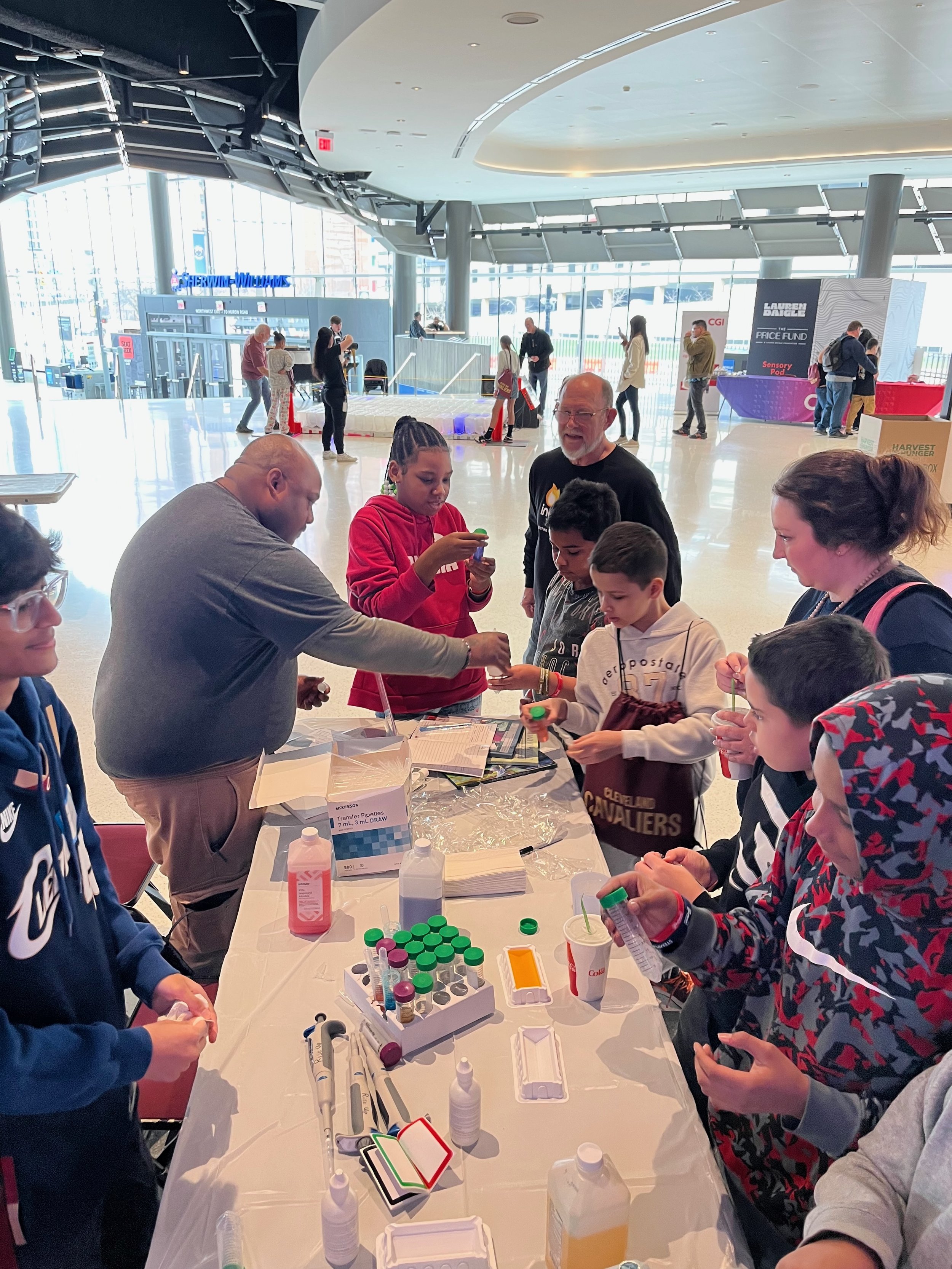
2026 Score with STEM
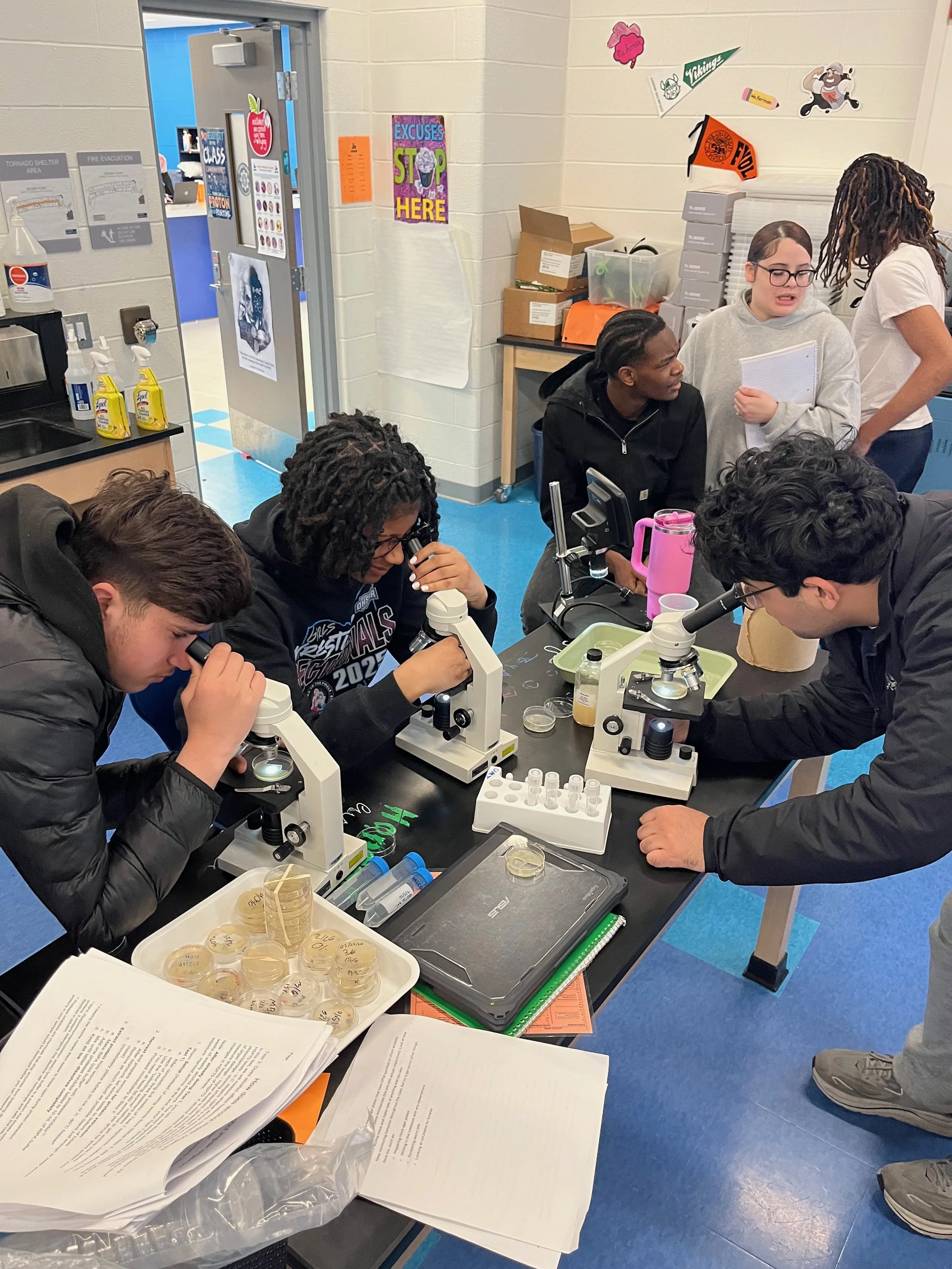
Students observing their C. elegans
Project update
This month, for our Life as a Scientist updates, we will feature two research groups that are using C. elegans as their model organism! C. elegans are microscopic, transparent worms that are widely used as a model organism in scientific research. Despite their simplicity, they share many essential biological processes with humans, making them powerful tools for studying genetics, development, and disease. Their short lifespan, ease of care, and fully mapped genome allow researchers—and students—to quickly observe how genes, environment, and behavior interact in real time.
At Garrett Morgan students are investigating a powerful question with real-world implications: how does alcohol affect the body at the cellular level? Using C. elegans students are exploring how different levels of alcohol exposure impact behavior, organ structure, and overall cellular health.
By comparing worms exposed to 0%, 15%, and 40% alcohol, students are tracking changes in movement and feeding behavior, while also examining how alcohol may damage key systems like the intestines and nervous system. Through staining techniques and microscopy, they can actually visualize changes in fat storage and neuron structure, bringing abstract biological concepts to life.
The project also introduces students to advanced lab techniques, including protein analysis, to measure how alcohol exposure triggers cellular stress responses. This allows students to connect what they observe at the organism level to what’s happening inside cells.
These researchers are making excellent progress and have become skilled at maintaining and working with their tiny model organisms. As they continue their experiments, they are building a deeper understanding of how lifestyle choices can impact health, while gaining hands-on experience with the tools, thinking, and assistance from professional scientists.
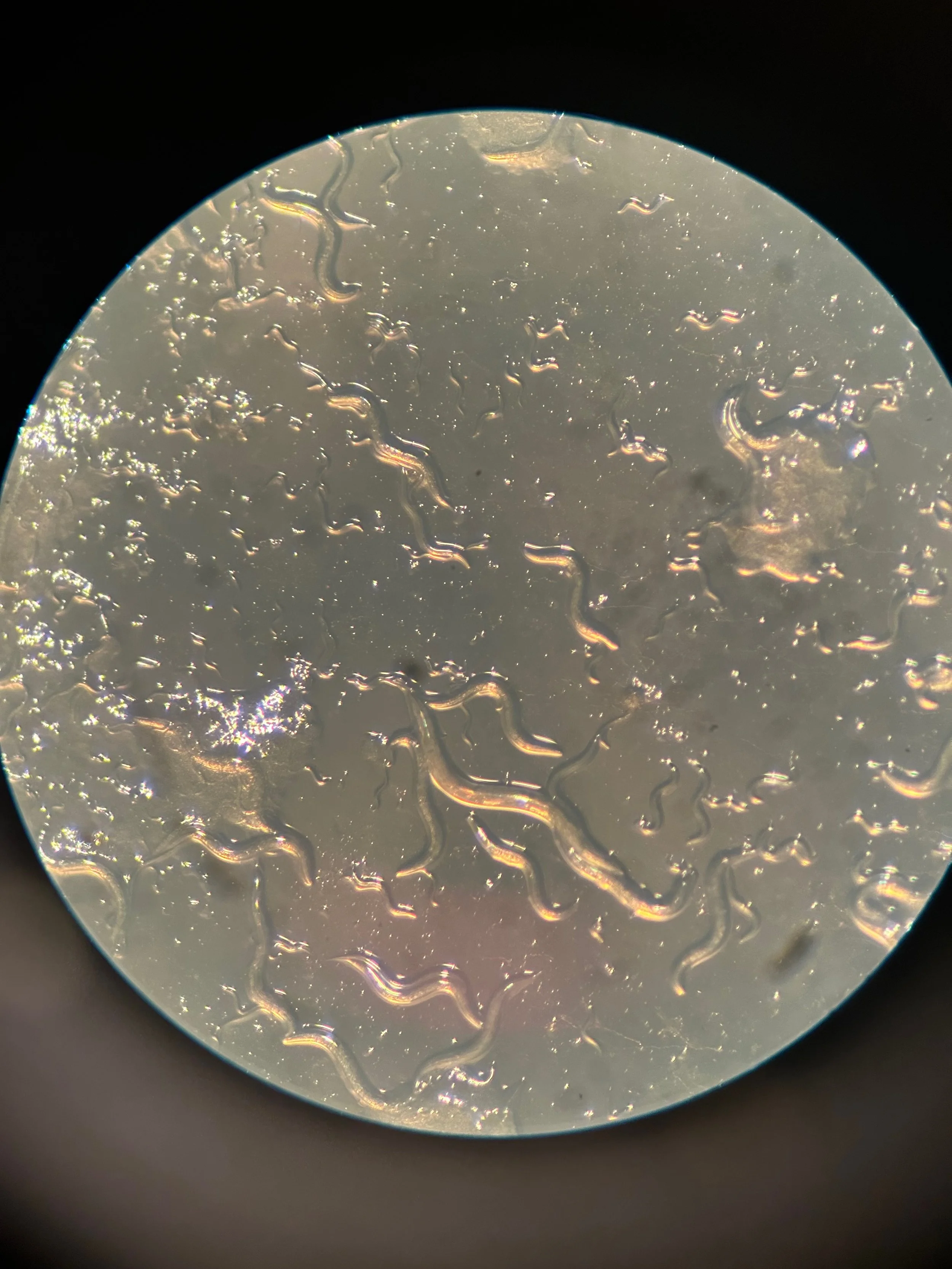
C. elegans under the microscope
Project Update
Another exciting project underway is at Lincoln-West where students are exploring how everyday environmental exposures, like household mold, can impact health at both the behavioral and cellular level. Using C. elegans, students are testing how different concentrations of mold exposure affect survival, movement, and feeding.
To safely model this, students use a filtered extract made from moldy bread, allowing them to study the biological effects of mold without introducing live spores into the lab. By comparing worms exposed to increasing concentrations, they are investigating whether mold triggers measurable changes in behavior and overall health.
Beyond observation, students are also diving into molecular biology by examining how mold exposure influences stress-response genes. This helps them connect visible changes in the organism to what’s happening inside cells—mirroring how scientists study environmental health risks in humans.
This group is making excellent progress and the students have become confident in maintaining and experimenting with these tiny model organisms. Through this project, they are exploring important questions about how the environment shapes health.
Once experimentation is finished, students will share their results at the Student Symposium and publish in the Journal of Young Scientists!
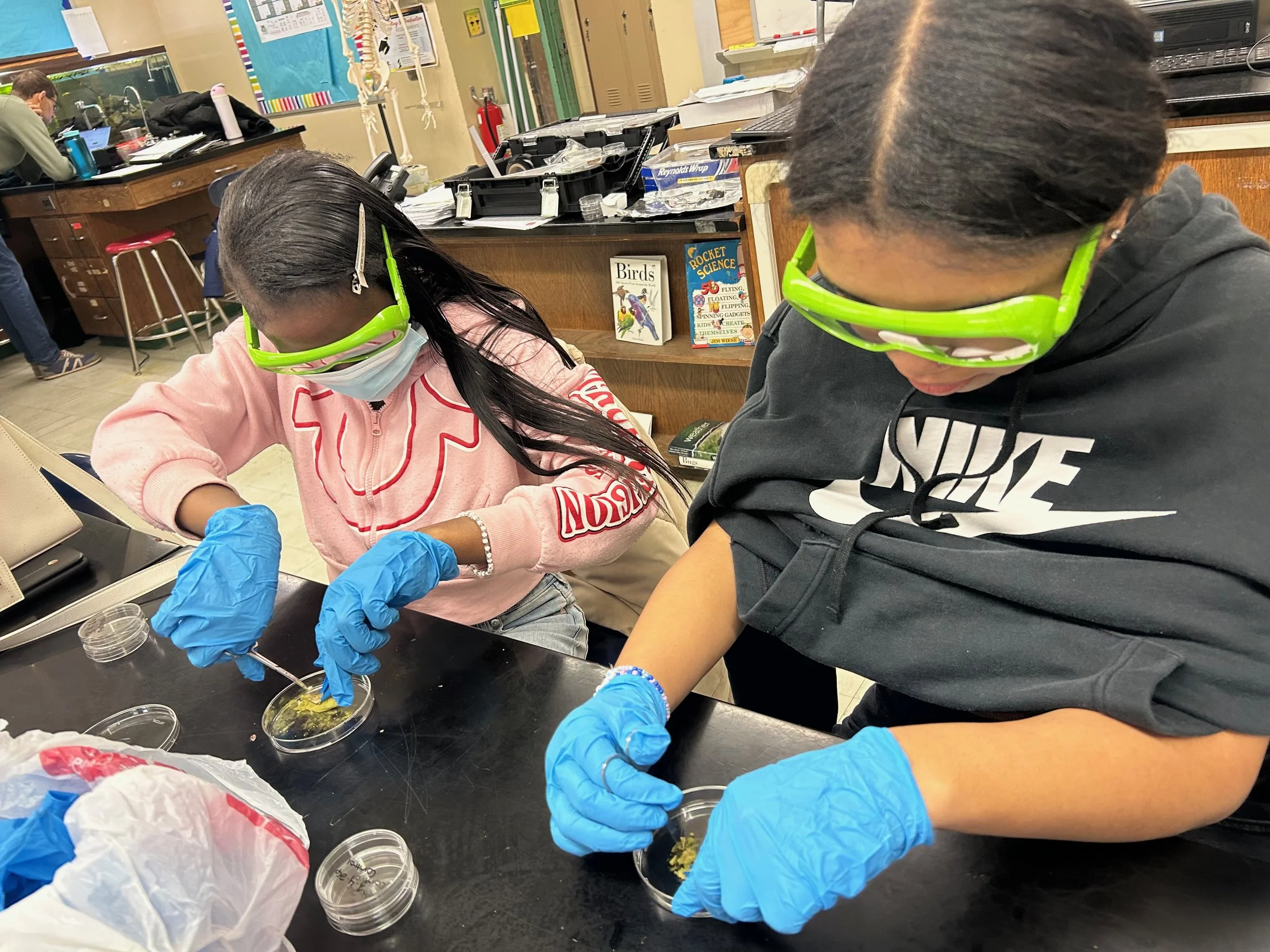
Moldy worms!
2026 Student Symposiums
Our Student Symposiums are just around the corner, and we’d love for you to join us in celebrating the incredible work of these young scientists. Below are the dates and times for both events:
Lincoln-West School of Science and Health
May 14th 9:30 AM - 11:30 AM
Garrett Morgan School of Engineering and Innovation
May 19th 9:25 AM - 11:15 AM
Over the past months, students have designed experiments, analyzed data, and developed research projects they’re excited to share. These symposiums are a chance to hear directly from them, ask questions, and see the impact of hands-on science learning in action. Come support their hard work, be inspired by their ideas, and help us celebrate the next generation of innovators!
We’ll have snacks and drinks for everyone to enjoy. If you’d like to support the event, please send us an email to let us know you’ll be attending—and feel free to share if you’d like to bring a snack, sweet treat, or soft drink to contribute!
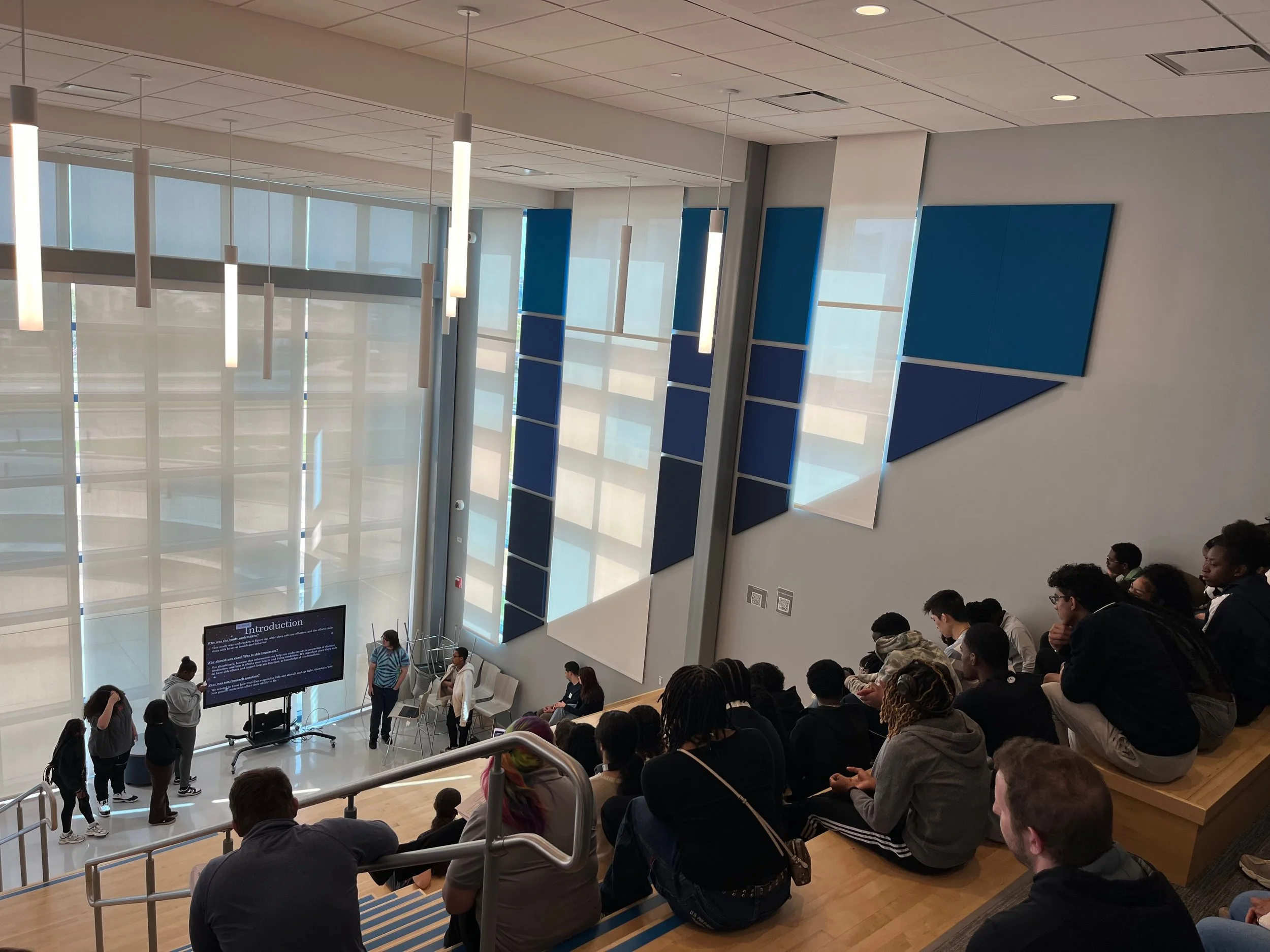
2025 Garrett Morgan Symposium
