February 2026
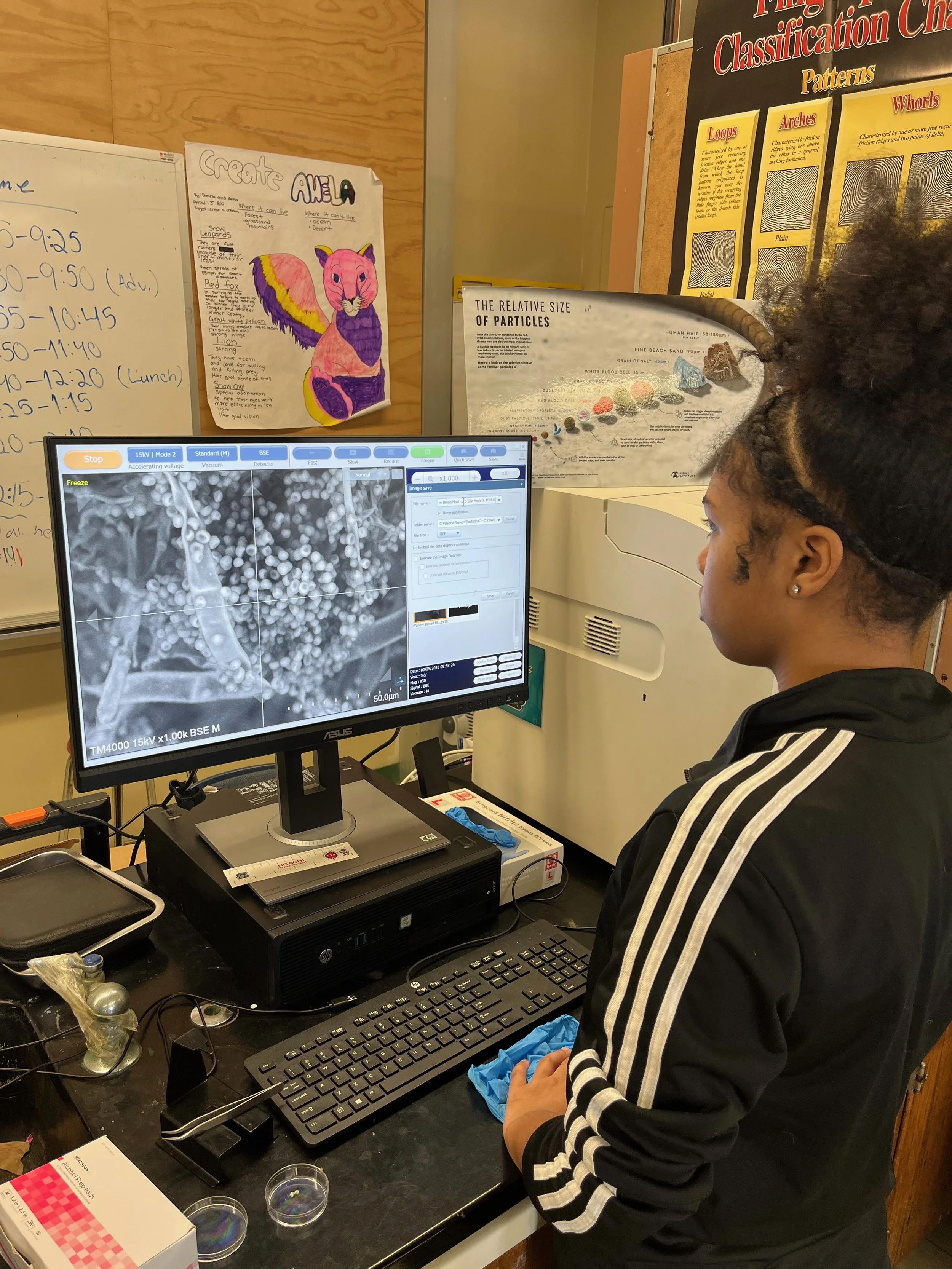
Student looking at mold with the Scanning Electron Microscope
Community partnerships
This spring, students are getting a rare opportunity to work with technology that most high school students never see firsthand: a Scanning Electron Microscope (SEM) on loan from Hitachi High-Tech Americas, made possible through Cuyahoga Community College (Tri-C).
A Scanning Electron Microscope is a powerful imaging tool that can magnify samples up to 100,000 times, allowing users to see structures far smaller than what is visible with a traditional light microscope. SEMs are typically found in university research labs, hospitals, and industry research and development facilities, places where cutting-edge scientific discovery happens.
What makes this opportunity truly extraordinary is how rare it is. This microscope is one of only 13 SEMs in the world loaned to community institutions, and Rise Up students at Garrett Morgan and Lincoln-West will have access to it for more than a month. That means students can explore world-class scientific technology right in their own classrooms.
Through the Life as a Scientist program, students will use the SEM to deepen their own research projects and examine samples at the nanoscale. We are deeply grateful to Tri-C and Hitachi High-Tech Americas for sharing this remarkable resource with our students. Partnerships like this help break down barriers to high-level STEM experiences and ensure that students can access the tools, mentorship, and opportunities that spark scientific careers.
By bringing the SEM into Garrett Morgan and Lincoln-West, we are not just showing students what advanced science looks like, we are inviting them to do advanced science.
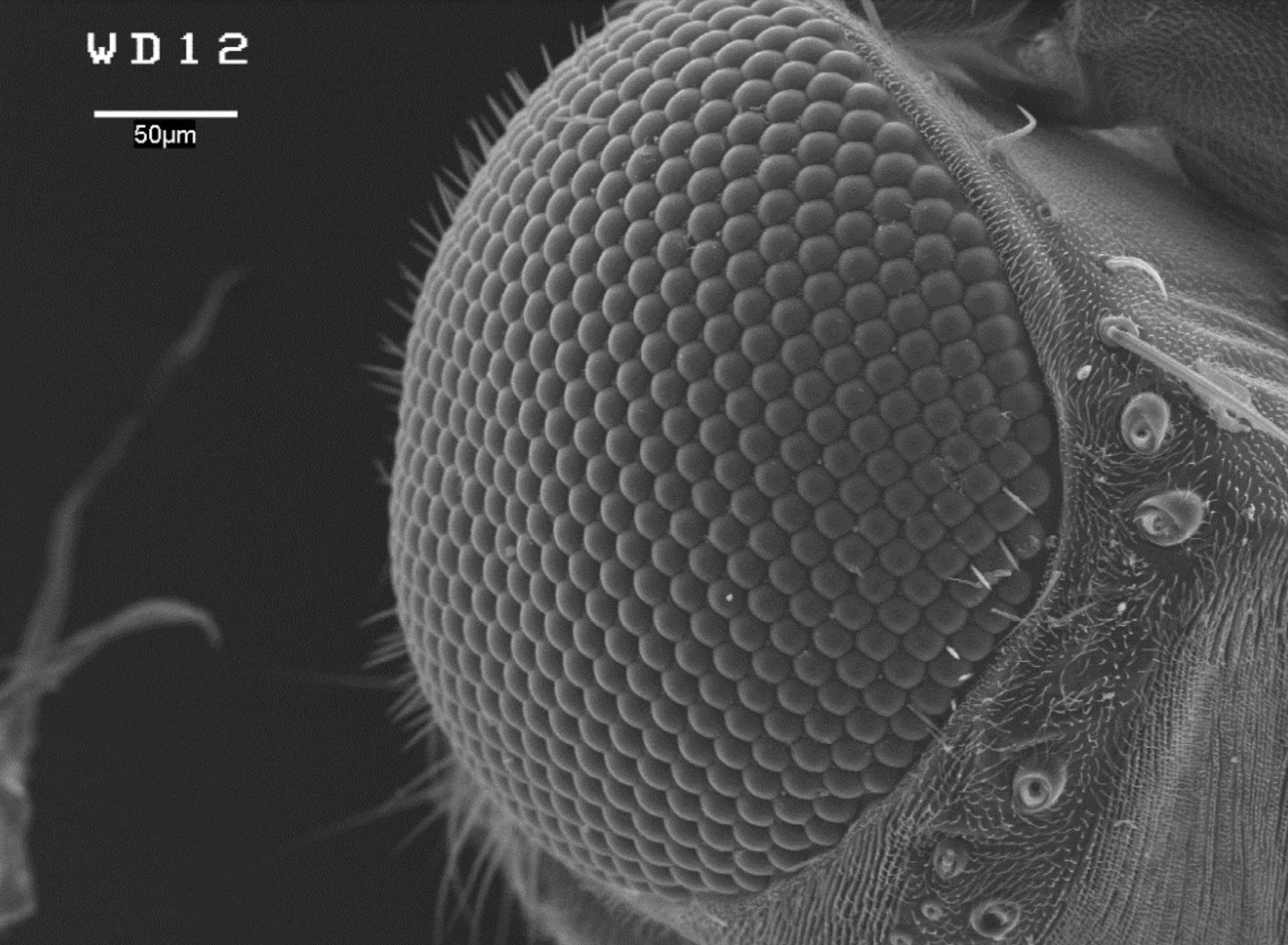
Fruit fly eye
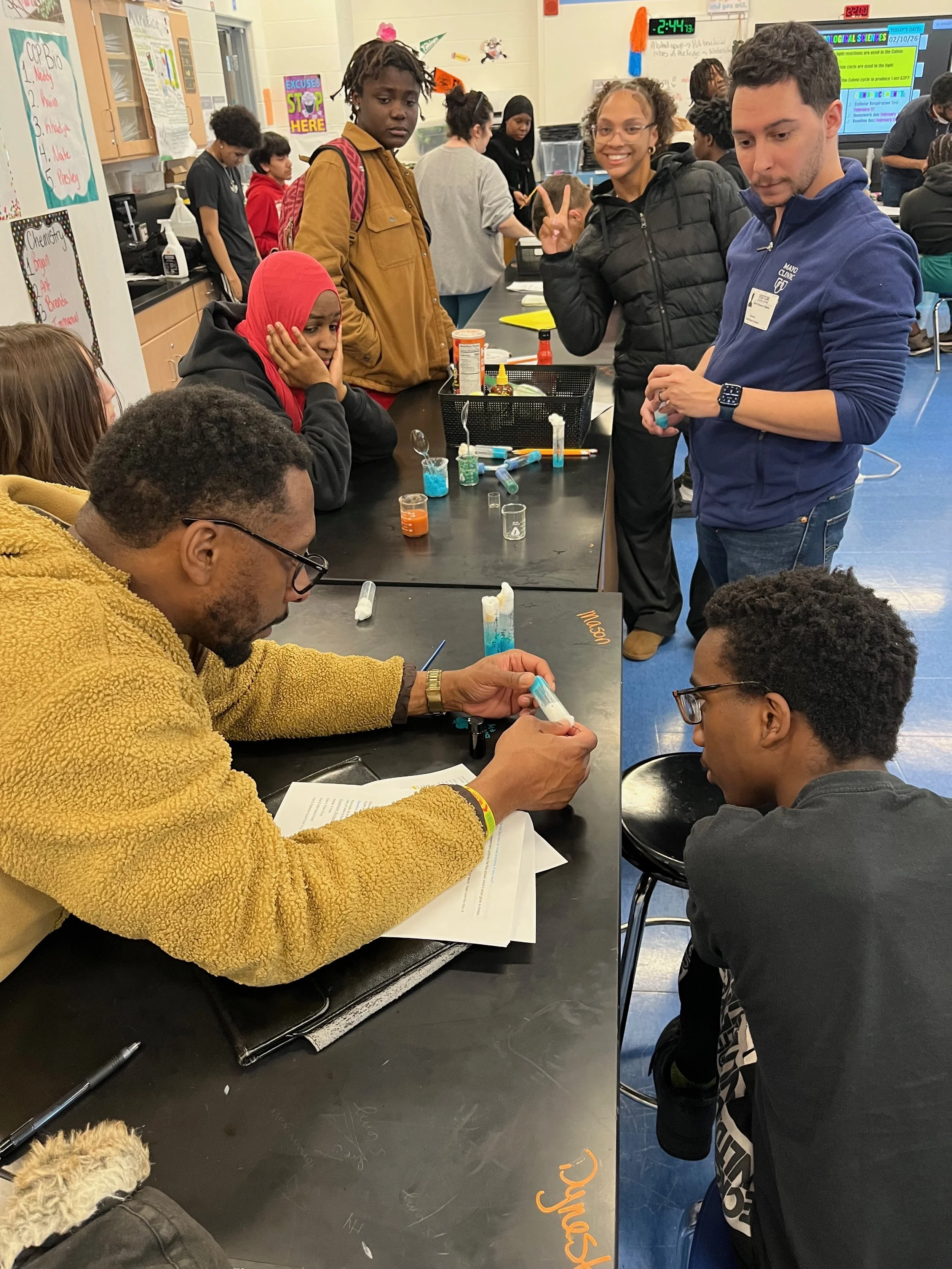
Analyzing results
Project update
At Garrett Morgan, a group of students are hard at work on a research project exploring a question that blends biology, physics, and everyday experience: How does sound affect living organisms?
Using Drosophila melanogaster (fruit flies) as a model organism, students designed an experiment to investigate whether different sound environments influence survival, behavior, and stress at the cellular level.
Students created three experimental groups of flies housed in sound proof boxes that they created:
Quiet control – flies kept in silence
Calm music – flies exposed to soft, slow-tempo music
Loud/fast music or noise – flies exposed to louder, high-tempo sounds
Although flies do not “hear” like humans, they can sense vibrations caused by sound waves. By placing fly vials near speakers, students can study how vibrations and sound environments may influence health and behavior.
This month, students completed the setup phase and began exposing the flies to their assigned sound environments. Each group will be exposed once per week, allowing students to compare how different sound conditions influence lifespan and activity over time. Students begin behavioral testing this week, using a climbing assay to measure movement and energy levels. In this test, flies are gently tapped to the bottom of a vial, and students record how many climb upward within a set time—an established way to measure health and activity in fruit flies.
In addition to tracking survival and behavior, students plan to conduct a molecular analysis at the end of the experiment. They will look for signs of DNA damage using a protein marker called γ-H2AX, giving them a glimpse into how environmental stressors may affect cells at a microscopic level.
Whether calm music is protective, loud noise is stressful, or silence turns out to be best, students will discover that science often leads to surprising answers. Stay tuned!
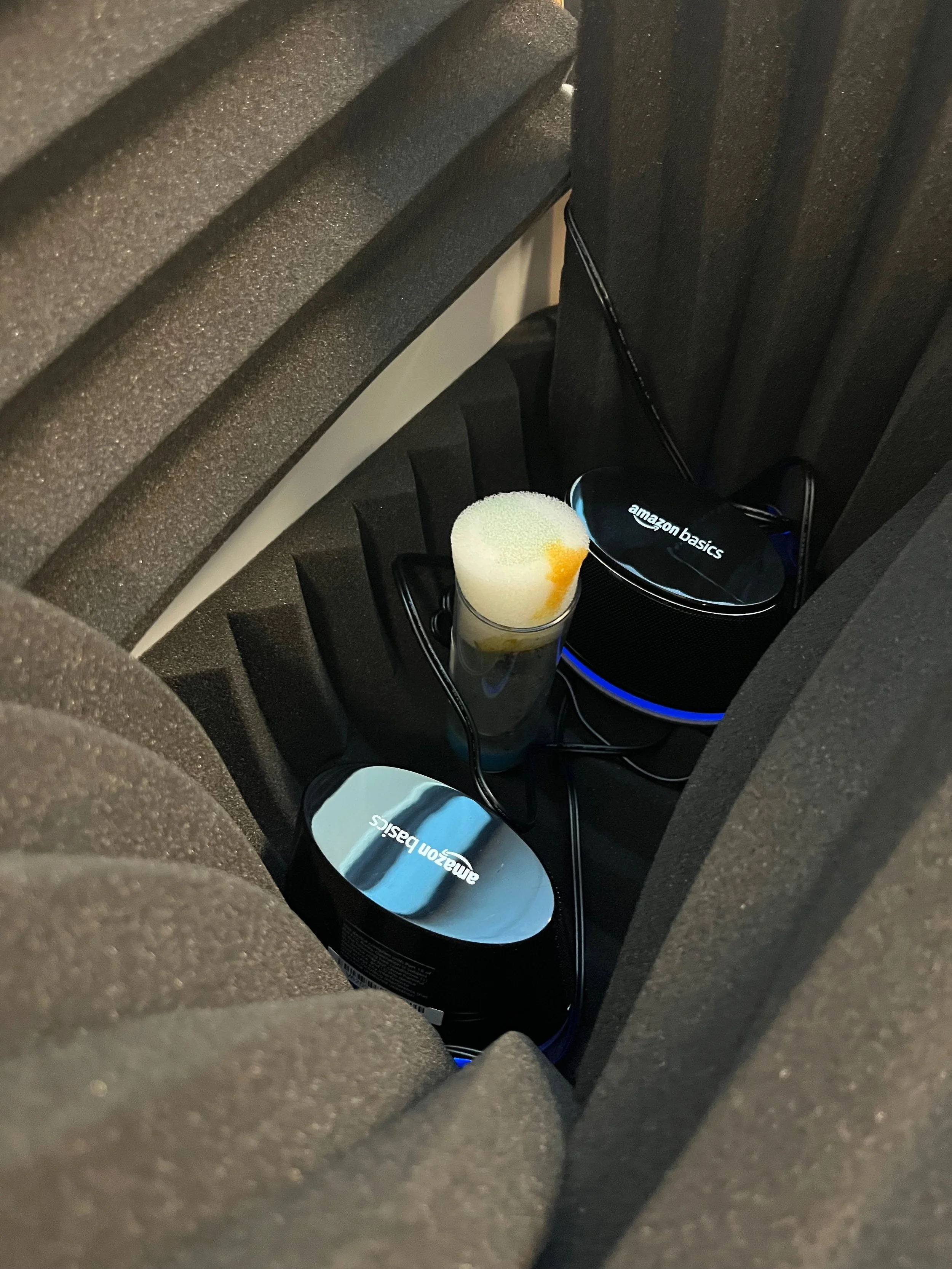
Flies jamming out to music
Project Update
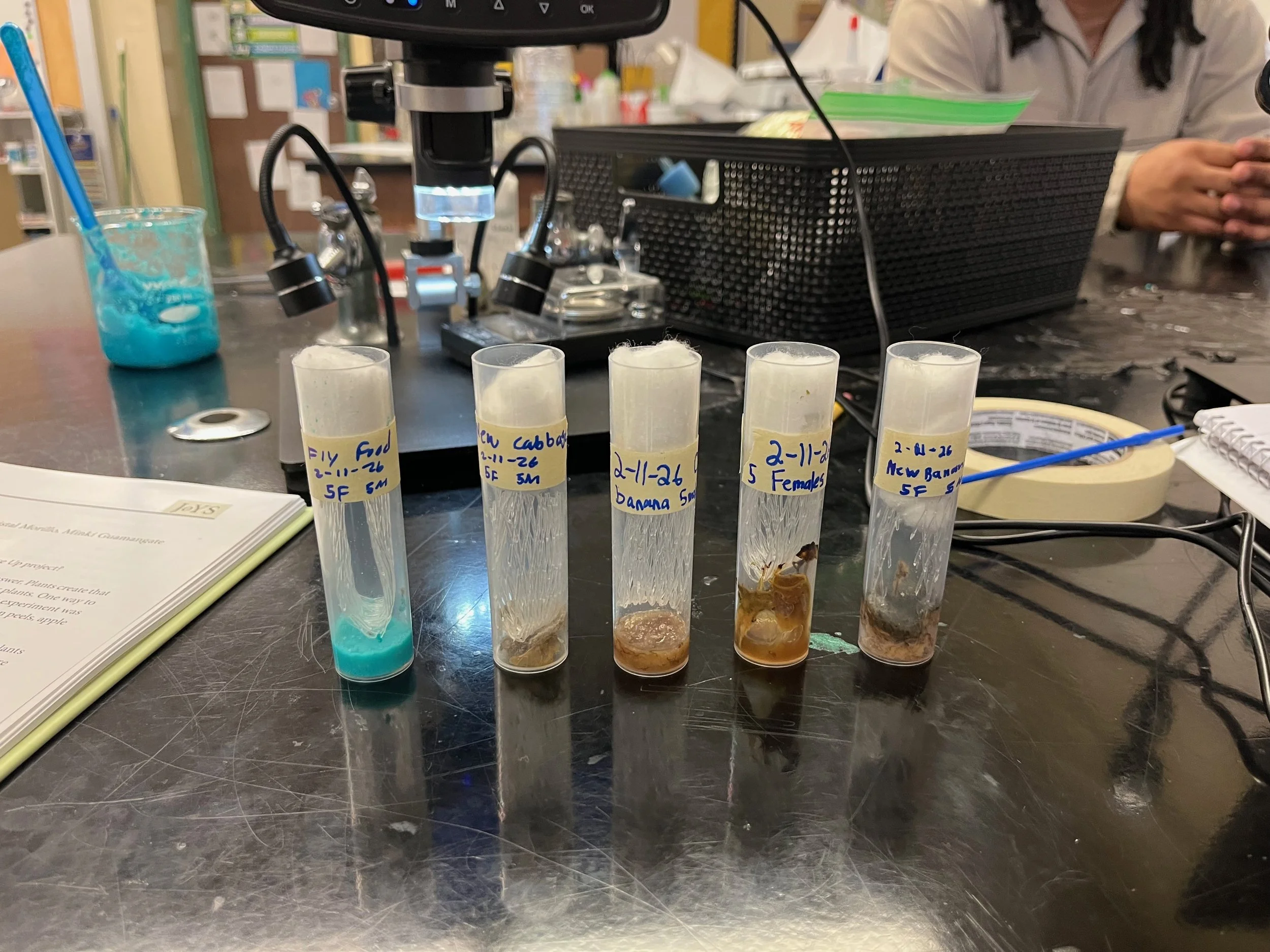
Another exciting project underway at Lincoln-West is focused how smell and food shape animal behavior. Using fruit flies as their model organism, students are asking a deceptively simple question: What do fruit flies prefer, and how do those preferences affect their behavior and reproduction?
Fruit flies rely heavily on their sense of smell to find food, choose where to lay eggs, and select mates. By manipulating different foods and odorants, students are investigating how environmental cues influence biological decisions, from movement and feeding to reproduction and cellular changes.
In the first phase of the project, students are testing whether fruit flies prefer certain foods or levels of ripeness. Using a Y-maze setup, flies are given choices between foods such as fresh versus overripe banana, lettuce, and standard fruit fly food. Students anesthetize the flies, place them in the maze, and track which food source they choose after waking up.
By repeating these trials with different food combinations, students are generating behavioral data determine food preferences. This experiment introduces students to experimental design, controlled variables, and data visualization, all essential skills in scientific research.
Beyond simple preferences, students are exploring how food and harsh odorants influence reproduction and movement. They are comparing breeding patterns in environments with different foods and tracking how many offspring are produced under each condition.
Students will also expose flies to strong-smelling extracts, such as peppermint, lavender, and lemongrass, to see whether these odors change food choices or affect movement and activity levels. These experiments allow students to observe how sensory cues can alter behavior and physiology.
In a more advanced extension, students will examine egg production at the molecular level by measuring a protein marker associated with cell proliferation. This gives students a rare opportunity to connect behavior, reproduction, and molecular biology in a single research project.
Once experimentation is finished, students will share their results at the Student Symposium and publish in the Journal of Young Scientists!
2026 Pi Race
Mark your calendars for March 14th, 2026 (3.14!) because the Rise Up Pi Race is back, and you can participate from anywhere! Race-only registration is open until March 11th!
The Pi Race is our annual celebration of math, science, movement, and community. Complete 3.14 miles your way: run, walk, bike, roll, or get creative, anytime between March 13–15. However you move, the goal is simple: celebrate and support science!
All proceeds support Rise Up’s mission to connect Cleveland-area high school students with scientists and mentors who guide them through authentic research and real-world discovery.
