April 2026
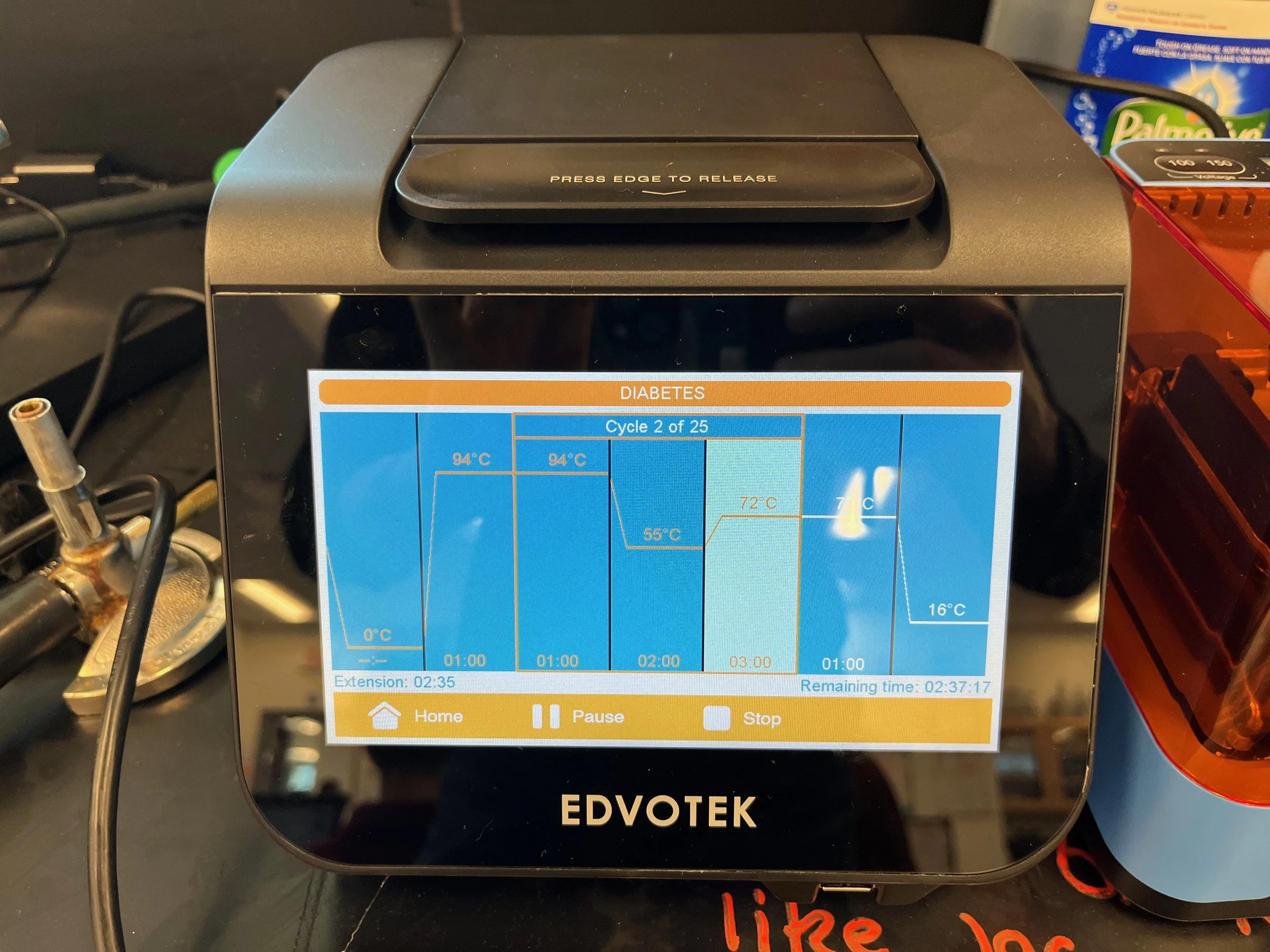
Diabetes PCR
Molecular work
Students at Garrett Morgan and Lincoln-West have begun working on the final molecular tests in their experiments. This year we have some new equipment that is opening up additional options for our students! In many research groups students are running their very own Polymerase Chain Reaction (PCR) tests. Surrounded by fruit fly samples, pipettes, and our new PCR machines, they are stepping into the role of professional scientists, working to uncover what’s happening at the molecular level in their research.
One group, for example, is studying how diet impacts diabetes in fruit flies. By feeding flies high sugar and high fat diets, students are exploring how these conditions affect insulin signaling, lifespan, and behavior. They’ve already observed physical and behavioral changes in the flies, but now they’re asking a deeper question: What’s happening inside the cells? That’s where PCR comes in.
PCR is a technique that allows scientists to take a tiny amount of DNA and make millions of copies of a specific region. It’s like zooming in on a single sentence in a massive instruction manual and printing it over and over again so you can study it closely. In this case, students are targeting genes related to insulin signaling and looking for clues about how diet might be changing gene activity in their flies.
Right now, as the PCR machines cycle through precise temperature changes, DNA is being copied again and again. Each cycle doubles the amount of target DNA, creating enough material for students to actually detect and analyze.
After PCR is complete, students will run their samples on a gel using electrophoresis. This step separates DNA fragments by size, creating visible bands in the gel. These bands act like a molecular fingerprint. If a band appears where expected, it tells students that their target DNA sequence is present. Differences in band patterns between control flies and those on high sugar or fat diets can reveal meaningful biological changes.
For students, this moment is powerful. They represent the outcome of an experiment the students designed, carried out, and analyzed themselves. By integrating PCR into the classroom, we are giving students access to the same tools used in medical and biological research labs around the world. They are not just learning about diabetes, genetics, or molecular biology but they are actively investigating these concepts in real time.
As this group continues their work, they are moving from observing symptoms to understanding mechanisms. This summer you can read about their final results in the Journal of Young Scientists!
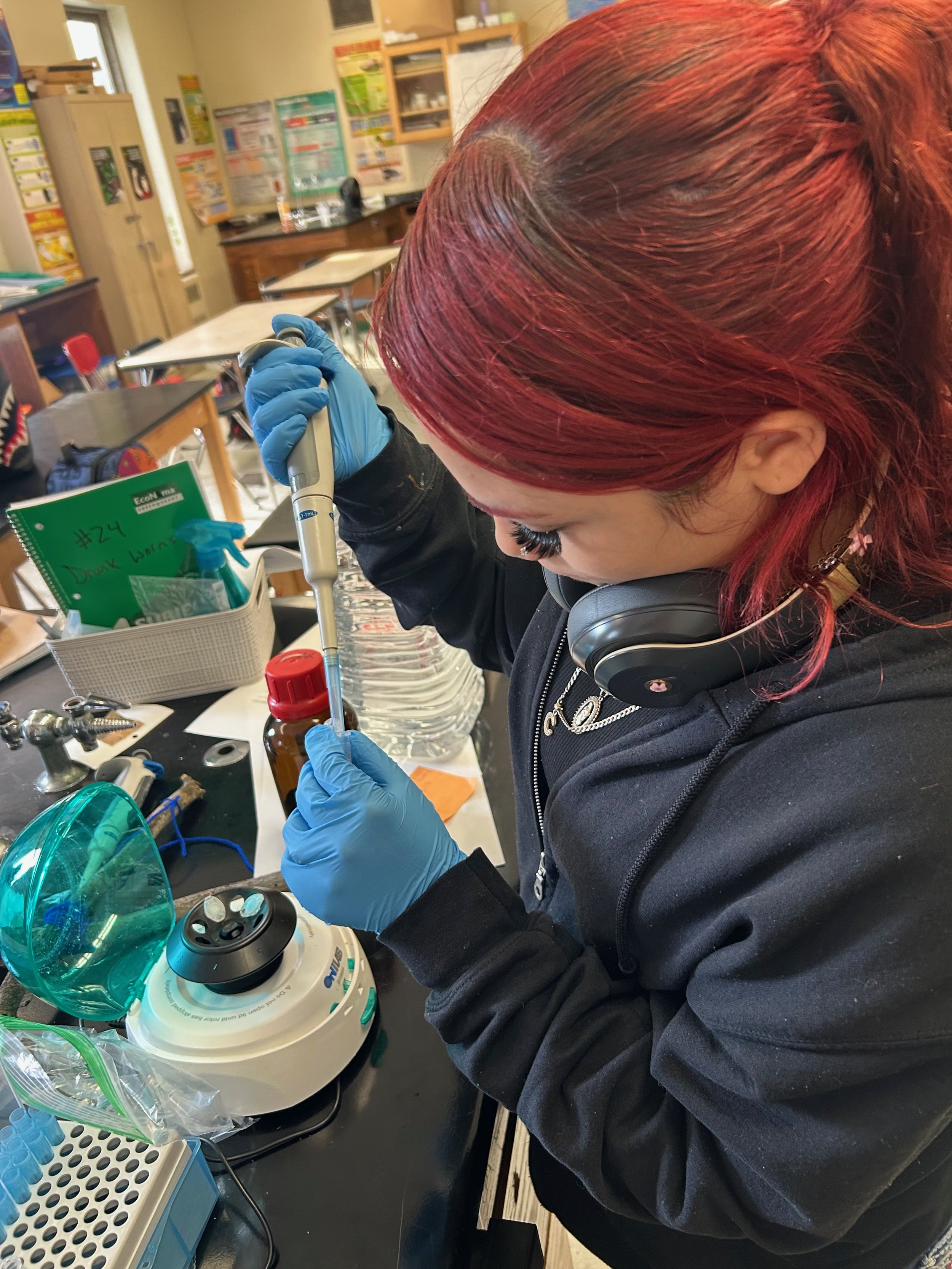
Preparing samples
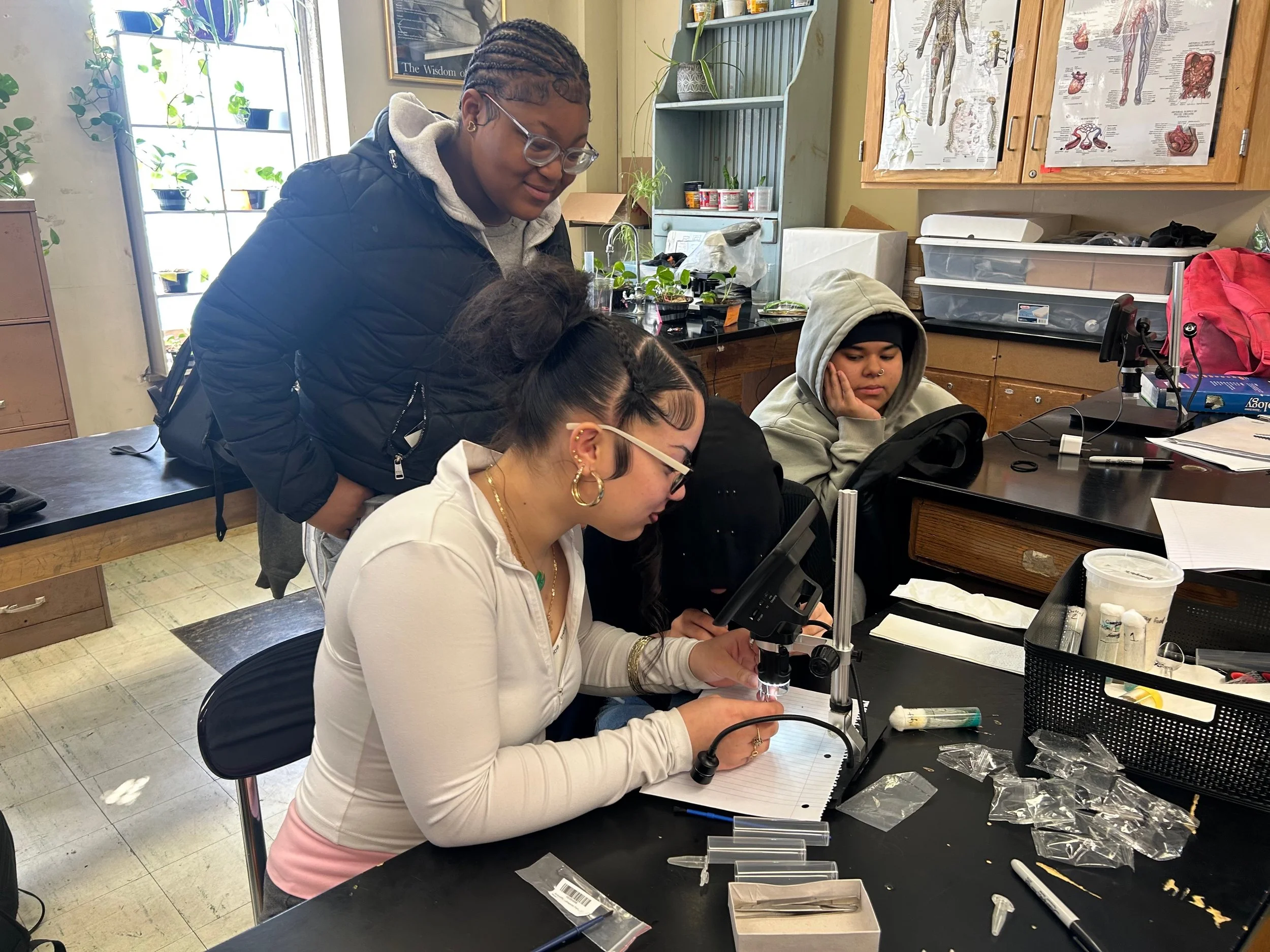
Fruit fly preparation
Resilience in Action
In research and in life, things don’t always go according to plan. Experiments fail. Data gets lost. Results don’t match expectations. Often what separates successful scientists from the rest isn’t their ability to be perfect. They need to be gritty and resilient. This month in Rise Up classrooms, our students experienced that lesson firsthand.
As part of their research projects, several student groups ran Polymerase Chain Reaction (PCR) tests to analyze genetic material connected to their experiments. These tests require precision, patience, and careful handling at every step. Despite their best efforts, one group encountered a setback: their PCR results came back inconclusive because some of their samples had degraded during the process. In a traditional classroom, that might feel like the end of the road. In the Life as a Scientist program, it’s just part of the journey.
Instead of giving up, students did what real scientists do: they adapted. They revisited their research questions, examined what might have gone wrong, and shifted their focus to the data they did have. Over the course of weeks, they had collected extensive behavioral data through careful observation and experimentation. That dataset, built through consistency and attention to detail, became their foundation.
With guidance and determination, the group leaned into their behavioral findings, analyzing patterns, drawing conclusions, and continuing to build their research story. Their work is still moving forward toward final presentation and publication. This highlights something we emphasize throughout the program: failure is not the opposite of success, it’s part of it.
Building resilience and grit isn’t just about pushing through challenges. It’s about learning how to think critically when things don’t work, how to stay curious in the face of uncertainty, and how to find new paths forward. These are the same skills that define scientists, innovators, and leaders in every field.
These students are developing the mindset to navigate obstacles, solve problems, and keep going. We hope they all learn that in the lab, and in life, progress belongs to those who persist.
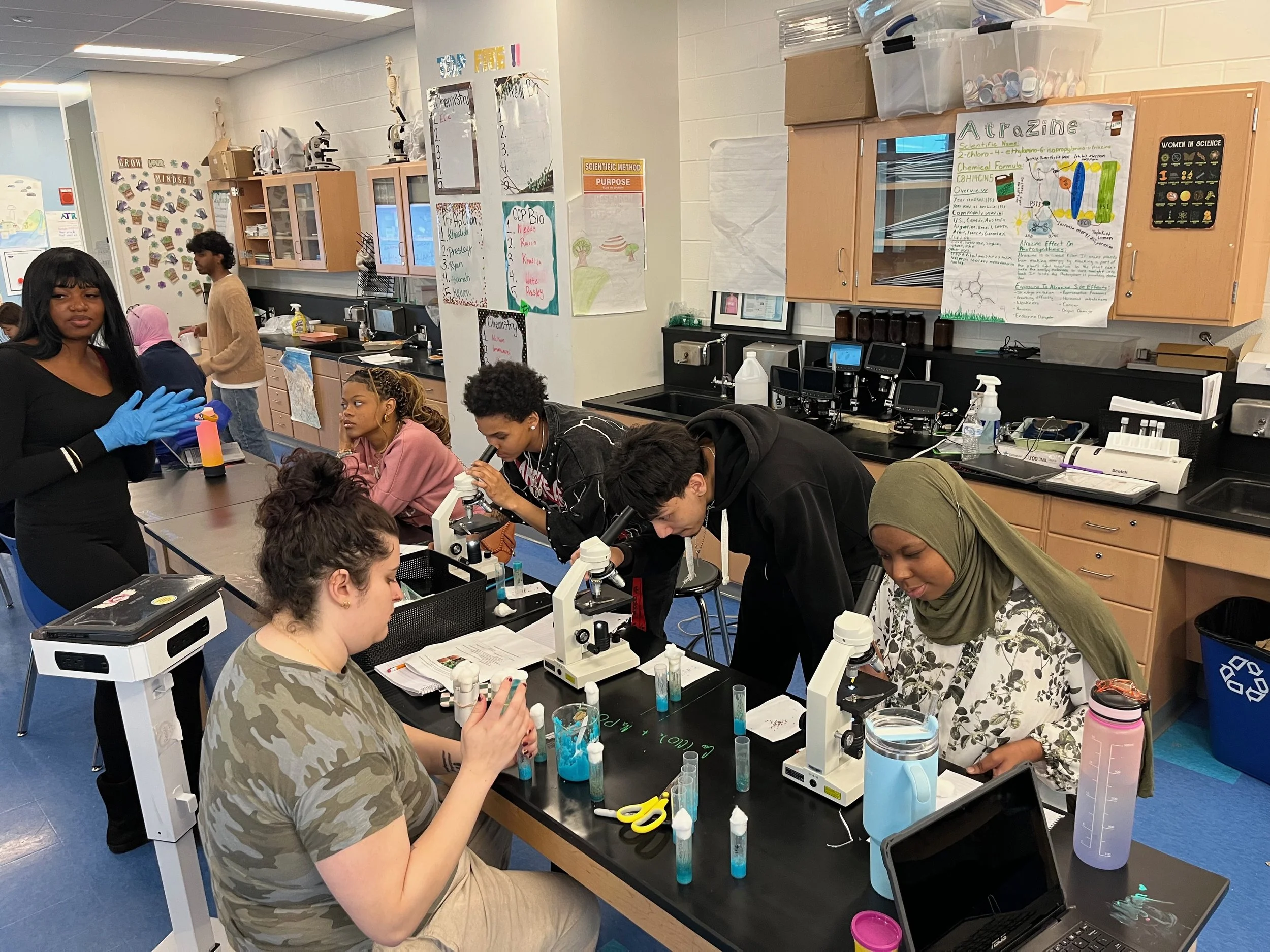
Students looking for cancer in their drosophila
2026 Student Symposiums
Our Student Symposiums are just around the corner, and we’d love for you to join us in celebrating the incredible work of these young scientists. Below are the dates, times, and virtual options for both events:
Lincoln-West School of Science and Health
May 14th 9:30 AM - 11:30 AM
Garrett Morgan School of Engineering and Innovation
May 19th 9:25 AM - 11:15 AM
Over the past months, students have designed experiments, analyzed data, and developed research projects they’re excited to share. These symposiums are a chance to hear directly from them, ask questions, and see the impact of hands-on science learning in action. Come support their hard work, be inspired by their ideas, and help us celebrate the next generation of innovators!
We’ll have snacks and drinks for everyone to enjoy. If you’d like to support the event, please send us an email to let us know you’ll be attending—and feel free to share if you’d like to bring a snack, sweet treat, or soft drink to contribute!
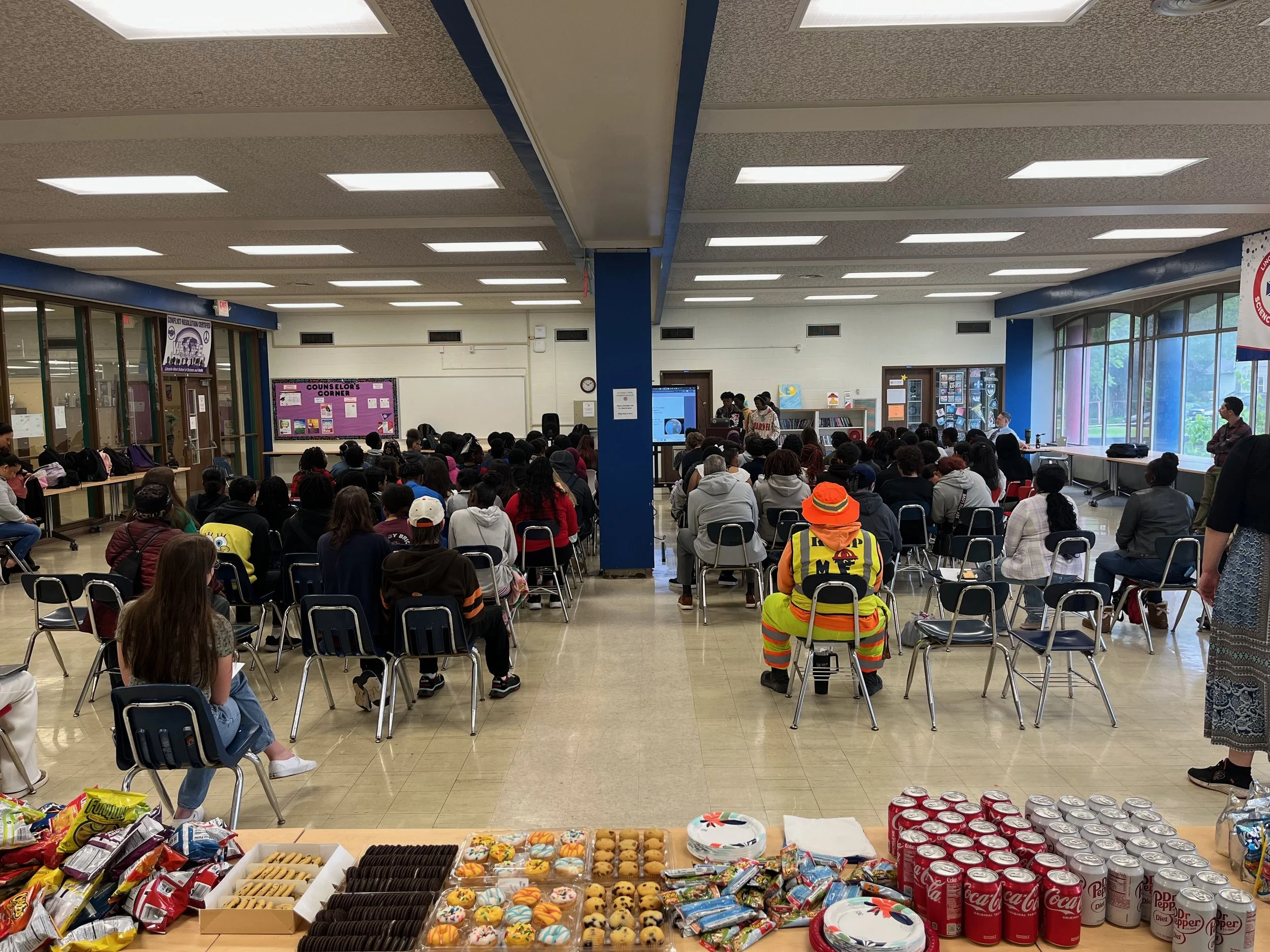
2025 Lincoln-West Symposium
