July 2026
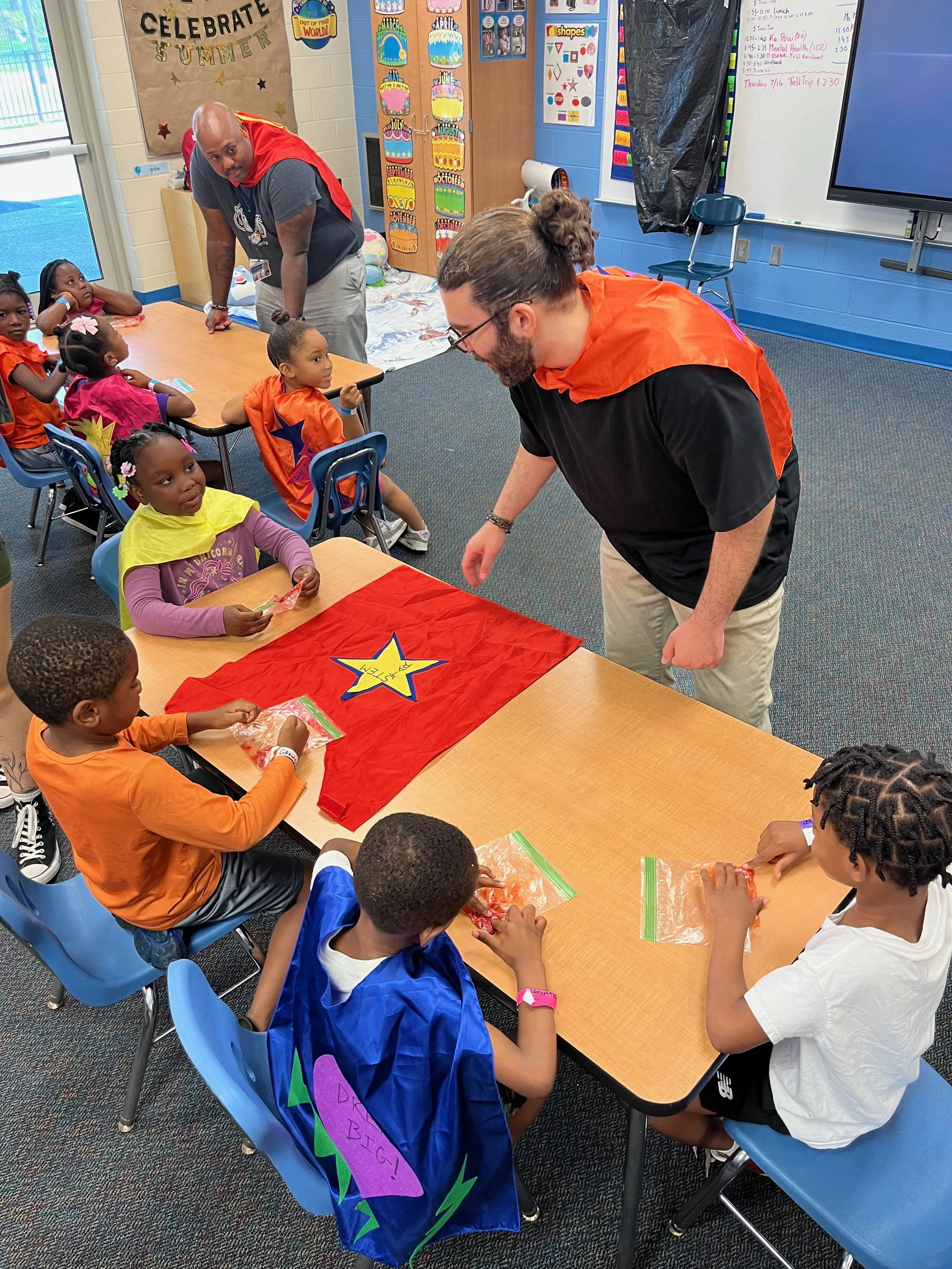
Juan and Abraham assisting super scientists
ODA Summer Camp
This July Rise Up was proud to support Open Doors Academy’s summer camp by introducing kindergarten, 1st grade, and 2nd grade students to the fascinating world inside living things for a week. Open Doors Academy offers this amazing opportunity to attend their summer camp for FREE to young scholars in Cleveland. We love partnering with them and always have a meaningful time with the students.
Throughout the week, students learned about cells, organs, and DNA through hands-on activities designed to make scientific concepts fun and engaging. Each student became a “Super Scientist” for the day by wearing a special science cape while completing their experiments and exploring biological samples.
The campers learned that DNA contains the instructions that help make every living thing unique before conducting their own DNA isolation using strawberries. Students smashed the strawberries, added different solutions, and watched as strands of DNA became visible. They then placed their samples in Petri dishes and examined them more closely under microscopes.
Campers also had the opportunity to view prepared mouse cells and organs, allowing them to connect what they had learned to real biological samples. For many of the students, this was their first experience using a microscope or seeing cells and tissues up close.
We loved watching the students ask questions, make observations, and share their discoveries with one another. We are grateful to Open Doors Academy for welcoming Rise Up back for our fifth year and for helping us inspire another generation of Super Scientists. A huge thank you to our amazing volunteers who offered their time and expertise to these students!
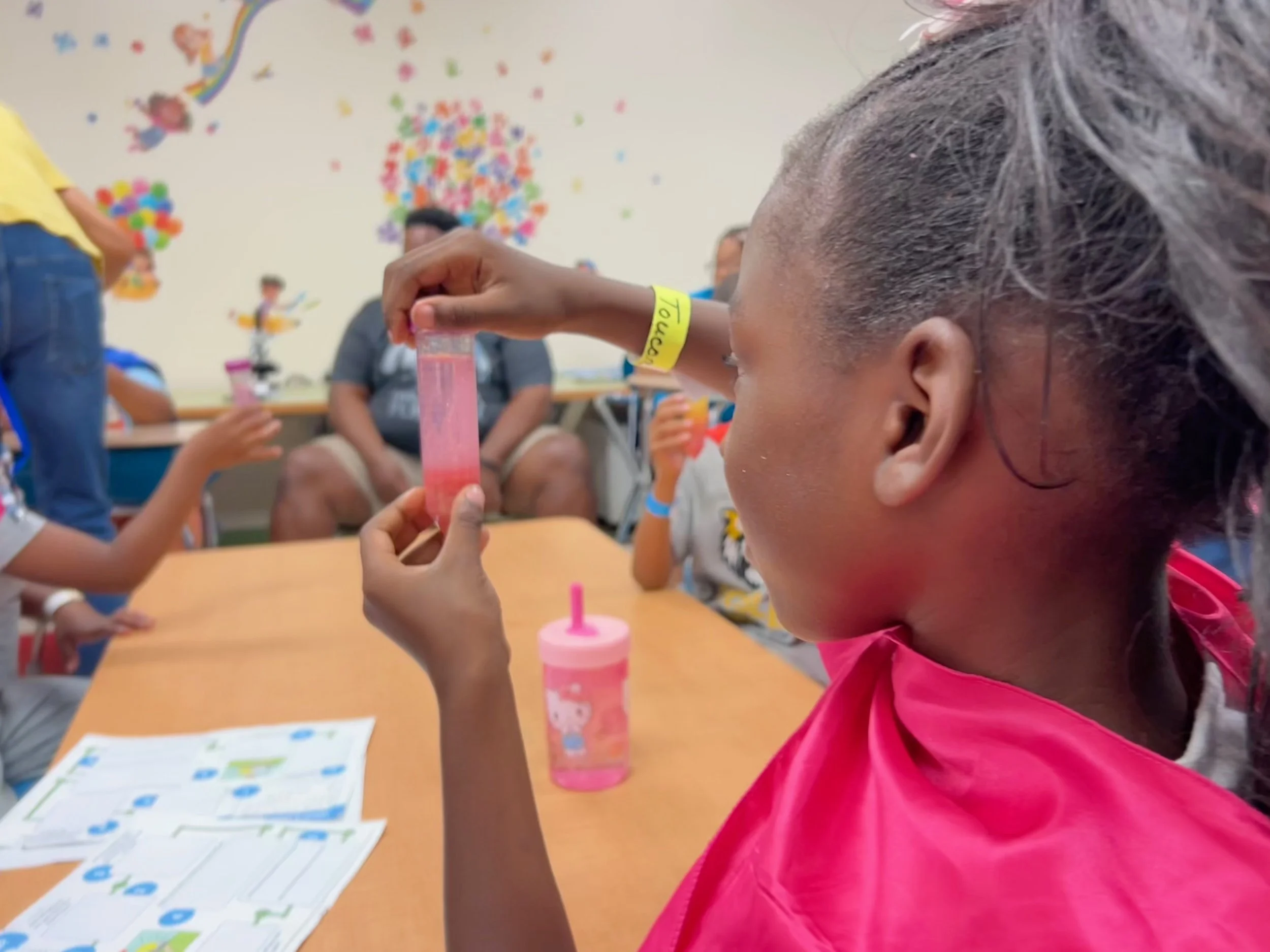
Strands of DNA rising
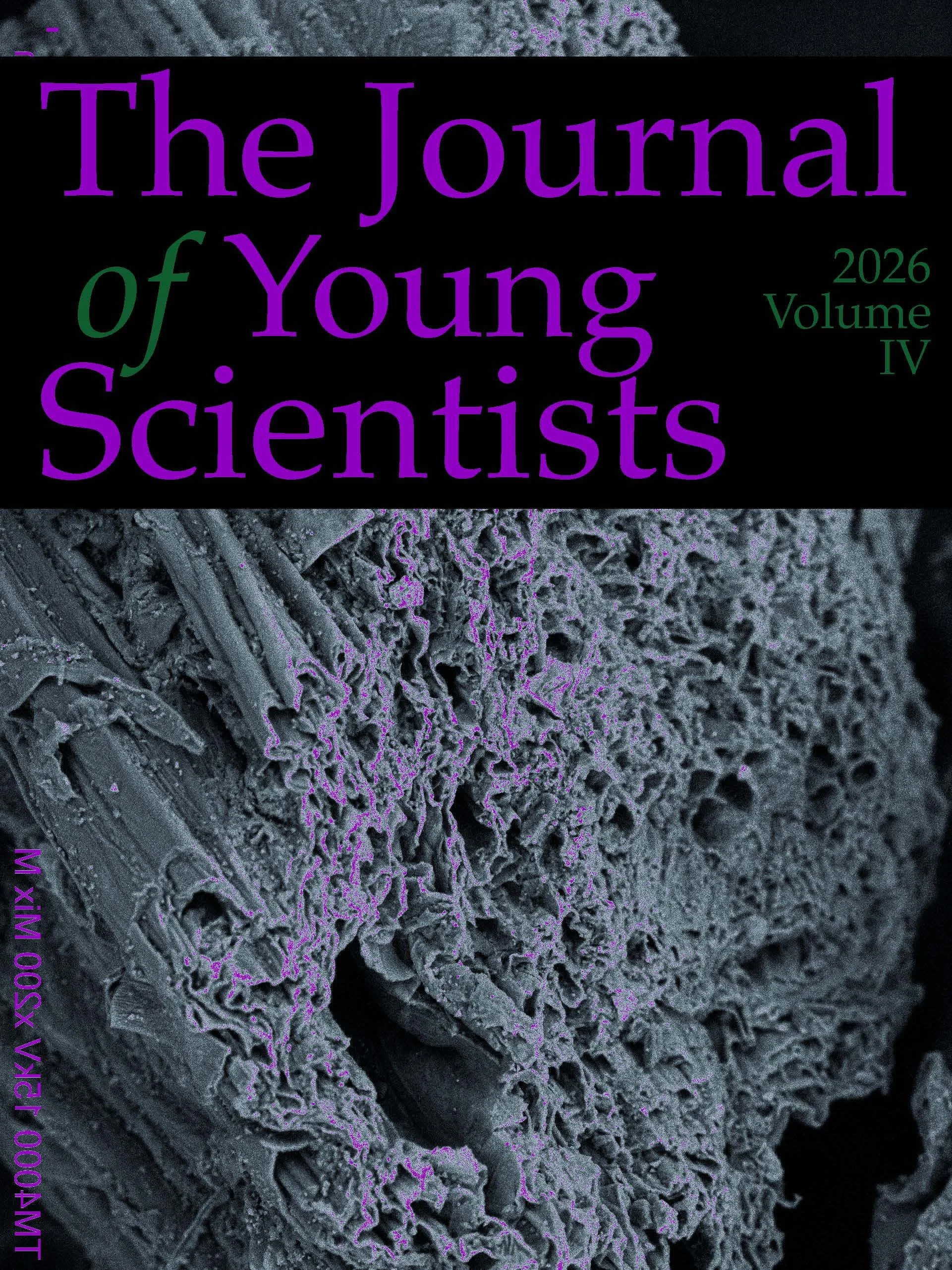
2026 Journal of Young Scientists
Sneak peek
The Journal of Young Scientists is officially with our publisher, and we are so excited for everyone to read about the incredible research conducted by our students this year. While we wait for the completed journal, please enjoy a special sneak peak preview of an editorial written by one of our talented volunteers, Bianca de Freitas Brenha, a PhD candidate at Case Western Reserve University. You can find it in the journal later this summer!
The Hidden Skills of Research:
Teamwork, Communication, Resilience, Organization
It is summer 2026 and the World Cup is taking the streets and the internet over. Well, at least in my own bubble. And as a Brazilian, every 4 years all my brain can think about is football, because… Well, because I refuse to say soccer with all due respect.
“Oh wait, no! Brain, help me here. I need to keep on track. Please!”
I am writing an editorial for The Journal of Young Scientists, and I need good communication skills so you, dearest gentle reader, understand what I am trying to say.
“Have you also read ‘dearest gentle reader’ with a specific voice in mind? Anyways. Ok, so back to the point.”
The reason why I can only think about football is because it is my current hyperfocus. Hyperfocus is a state of intensely concentrated attention on a task or subject of interest, where the person becomes so absorbed that they lose track of time, miss external cues, and effectively tune out everything else. Including finishing writing this editorial.
You must be thinking right now (“or maybe not”); how does the World Cup, football and hyperfocus have anything to do with the title of this editorial? In my mind, EVERYTHING!
As you could testify in a few paragraphs, I clearly can’t focus on one thing at a time. Which reminds me that I still haven’t told you: I have attention deficit hyperactivity disorder, or for short, ADHD.
Here’s the thing about ADHD that most people get wrong: it is not actually a deficit of attention. It is a deficit of regulating attention. My brain does not pay less attention to the world. It pays attention to everything, all at once, with no volume control, until something interesting enough hijacks the whole system and suddenly I am hours deep into the World Cup group stage statistics when I was supposed to be finishing this editorial… or my research paper draft. “Ok. I hope my supervisor doesn’t read this the wrong way!”
The same ADHD mind that hyperfocuses with near-obsessive precision on a random topic can also be the one who makes the unexpected connection that reshapes a whole project. Not because it is smarter. Because it was never filtering information the same way everyone else was. This is what researchers like Thomas Armstrong mean when they argue that neurodivergent cognition isn’t a broken version of normal cognition, it’s a different strategy for processing the world.
“Now, before you stop reading, because you probably are getting bored out of your mind, I promise this is going somewhere. Stick with me.”
Think about a football team, and yes, dear reader, we are back to football. A team does not win because everyone is a striker. You need the goalkeeper who reads danger before it arrives. The defender who holds structure when everything around them is chaos. The midfielder who connects every moving part and keeps the whole team organized. And the forward who takes the creative risk nobody else will. Remove any one of them and the whole thing falls apart.
Science works exactly the same way. Some people thrive in the kind of deep, repetitive precision that makes a protocol reliable. Others are the ones who make the connection nobody else in the room saw coming, the outlier everyone else filtered out as noise, the experiment that sounds absurd until it isn’t. And then there are the ones who can stand in front of a room and make a niche finding comprehensible to people outside the field, who turn a hallway conversation into something bigger.
And before you say it, yes, some people really are just built different. But these are not rigid categories. Every scientist moves between them; the difference is which ones feel like home and which ones feel like homework. The actual unit of scientific progress is not the individual genius. It is the whole squad. It is the teamwork.
Yet, sometimes, the academic culture we inherited tells a different story. The myth of the lone genius, the solitary scholar who figured it all out alone in a room somewhere. (Spoiler alert: that person does not exist). This kind of culture that makes asking for help a weakness, admitting confusion is incompetence, and collaboration gets quietly treated as evidence that you couldn’t do it on your own. It is a myth that was never built with everyone in mind. And some of us feel that more than others.
So, of course, neurodivergence comes pre-packaged with doubt. Not just self-doubt, though there is plenty of that, but the doubt of others. People question your capacity when you take longer to start (and conclude) a task, when you are inconsistent and disorganized even though the finalized product is there. The system was not built for the way our brain works, and when we struggle inside it, the easiest explanation for us and for everyone watching is that maybe we are just not cut out for this. But, the good news, and there is good news, that is a lie.
“Quick pause on the train of thought. You don’t have to have ADHD, or autism, or any diagnosis at all, to have felt this. Most people in academia have had at least one moment of thinking: I am not sure I belong here.”
My argument is for changing the environment, not for changing the people. And slowly, in small but real ways, in journals like this one, in labs where people actually talk to each other, in the emerging investigators who are choosing to do things differently, the culture is changing. Brazil 2002 World Cup was written off before the tournament started. Nobody believed in that team. They won anyway. Resilience in academia works the same way. Pushing back against a system that was never built for everyone is not just survival. It is a form of resistance.
But resilience will always matter in academia, regardless of how much the system improves. The experiment that fails on a Tuesday for absolutely no reason. The grant that scores well, funds nothing, and leaves you staring at the ceiling. The reviewer #3 you will never meet but you will remember forever. Sometimes all you can do is decide, one more time, to keep going. Not because it gets easier. But because the science matters, and so do you.
However, resilience without direction won’t finish your thesis. At some point, we also need to learn how to make peace with constraints. Time is limited. Money is limited. The hyperfocus that carried you through one project will happily derail the next one if you let it. At some point you must choose, prioritize, and execute.
Which is where organization comes in, and where, I will be honest, I struggle the most. Organization is not a personality trait you either have or don’t. It is a skill, and like all skills it can be learned, borrowed, or distributed across a team. The person in your lab who color-codes every sample label, keeps perfect notes, and has a system for their system, that kind of organization is what reproducible science is built on. The goal is not for everyone to become them. The goal is to build environments where that skill is shared rather than isolated, valued rather than taken for granted, and accessible rather than treated as a personal moral virtue.
But to be honest, I am the absolute worst person to talk about organization skills. My notes app is a crime scene. My protocols live in three different notebooks, one Google Doc, and a voice memo I recorded at 11pm and never transcribed. And yet here I am, arguing that organization is essential to science, because it is.
Somehow, after writing three paragraphs about the importance of organization, I am struggling to organize my way into a conclusion. Which is a reminder that organization applies to samples, notes, data, and apparently also paragraphs, none of which come naturally to me.
"C’mon, brain. I know the game is exciting. But we are so close!”
If when you read the title, you were expecting something different, I understand. Maybe a guide. Some actionable takeaways. An explanation for why these skills is hidden in the first place.
Instead, you got a Brazilian PhD student derailing on the topic and writing about football, ADHD, and reviewer #3, on the last day of the deadline, with the World Cup still on in the background.
It looks like a mess. It is, a little. Chaotic? Yes. Organized? Debatable. Understandable? I hope so. And yet, if you read carefully, every single skill from the title is in here. Not as a checklist. But as a lived argument, hidden in the text, and at the same time right there the whole time (in italic).
Whoa. Starting was the hardest part. But finishing? Finishing was a delight.
Armstrong, T. (2010). Neurodiversity: Discovering the Extraordinary Gifts of Autism, ADHD, Dyslexia, and Other Brain Differences. Da Capo Press.
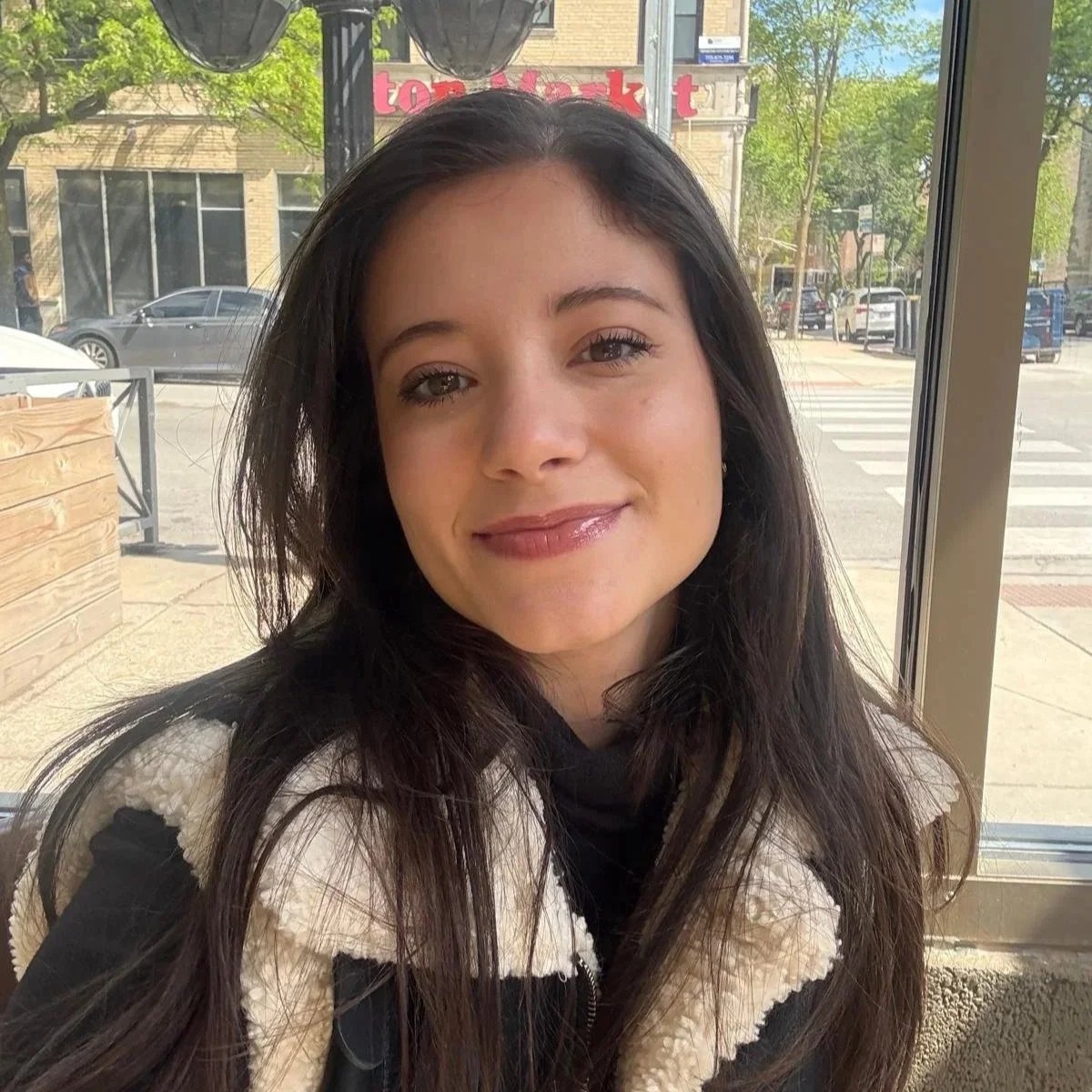
Bianca de Freitas Brenha
